


The American Broadband Deployment Act of 2025 (H.R. 2289) has just been introduced in the U.S. House of Representatives. If this bill clears Congress, it will give wireless carriers and the federal government full authority to flood our towns and cities with small-cell 5G infrastructure—with no way out.
The legislation can be likened to the first version of President Trump’s “Big Beautiful Bill,” which attempted to nullify state and local government ability to stop federal AI projects. Now, this deregulatory trend moves on to federal wireless projects.
Under this new act, state and local governments no longer have the final say for wireless infrastructure, such as 5G small cell sites.
These new small cell sites aren’t the normal triangular cell towers you see from a distance. Small cells blend into the environment and can sit atop regular infrastructure like light poles and stop lights.
You’ve probably encountered them before, without even knowing it.
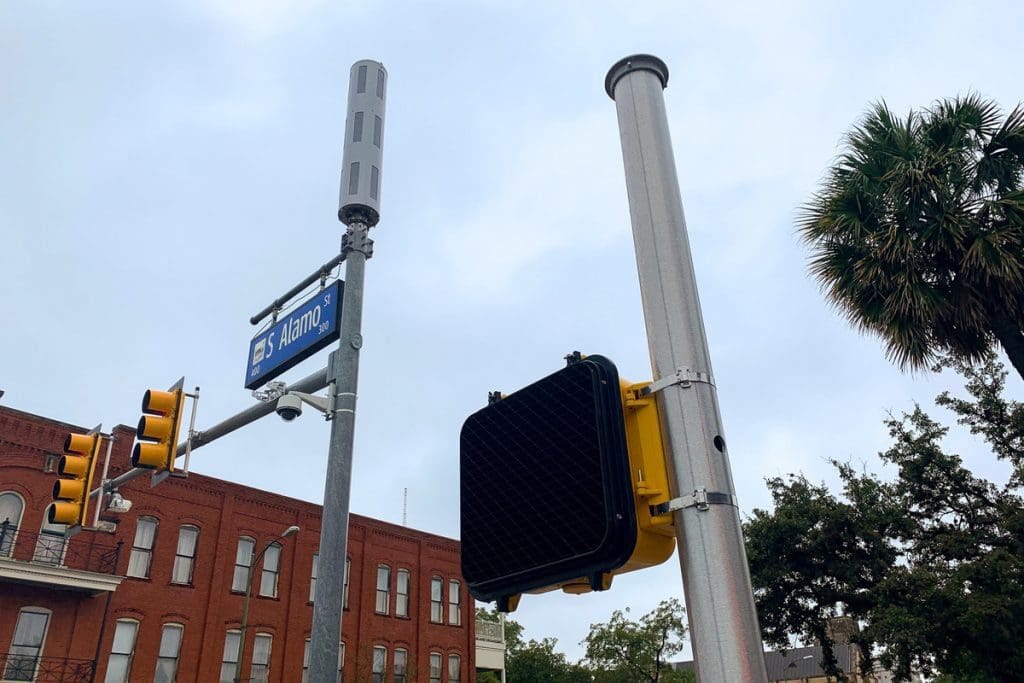
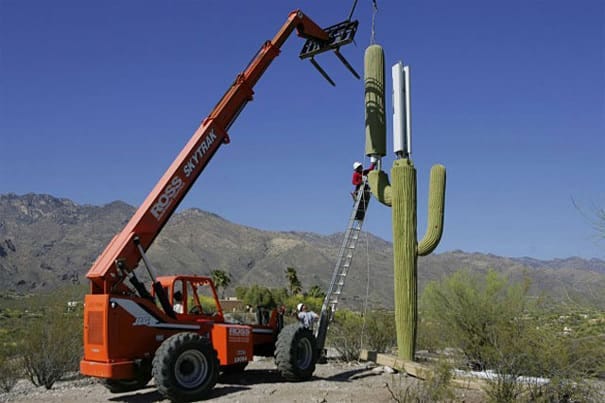
Let’s dig into the many reasons you may begin to see 5G small cells everywhere in your town.
What’s being installed?
There is special attention on a new phrase, “Small Personal Wireless Service Facilities”—these are compact 5G mmWave antennas used for dense networking.
They are mounted below 50 feet—close to street level, unlike normal cell towers, and can be mounted on anything, including poles, buildings, and traffic signals.
They typically look like cylinders or pizza boxes.
Can’t Stop Won’t Stop
Section 253(a) of the bill works to supersede any state or local regulations on wireless infrastructure.
It states, “No State or local statute or regulation, or other State or local legal requirement, may prohibit or have the effect of prohibiting the ability of any entity to provide, improve, or enhance the provision of any interstate or intrastate telecommunications service.”
The request and approval process for wireless infrastructure has also been ‘streamlined,’ making it possible for thousands of cell sites to be deployed quickly.
Wireless providers can submit an unlimited number of requests for new cell sites, potentially thousands at a time, and state and local offices must respond in a short timeframe.
They have 10 days to reply to each request (it’s unclear if they can also ‘batch’ replies).
They have 60 days to approve or deny the site.
If local offices do not respond within the timeframes, these cell sites are deemed approved, leaving towns vulnerable to a flood of requests that they simply can’t respond to even if they wanted to.
Who needs reviews?
Typically federal projects need to undergo reviews under the National Environmental Policy Act (NEPA), and National Historical Preservation Act (NHPA) which ensure the project is not going to harm the environment or degrade historic value.
These federal wireless projects will now be completely excluded from these reviews.
Similarly, local governments cannot reject a request based on health, environmental, historic preservation, community character, property values, or public opposition.
If this bill is passed, the only valid way a request can be rejected is if the project is not built to code. Denials must be provided with evidence and must cite the rule violations.
Road to 5G Hell
The intent of this bill is clear: approval should be the default outcome of any new 5G installation, no matter the number of new antennas, no matter how damaging it is to the environment, no matter how much people oppose it—it simply must happen.
These new small cell sites will likely provide 5G mmWave technology that can generate radiation from 5GHz to 60Ghz—a dense electromagnetic field that cannot travel very far. For that reason, it necessitates extensive coverage and placement of 5G small cell sites everywhere.
You may remember reports from different parts of the world that have shown dead animals littering the streets and half-dead trees that faced these 5G small cell sites.
Soon, this may be what the future looks like in cities everywhere.
Why?
5G mmWave can be utilized for many insidious applications, including high-bandwidth connections for cameras, sensors, robotics, and “wireless sensing.”
It’s a critical piece of a technocratic control grid; it can power self-driving cars, drones, and robots, and it can connect a network of AI-enabled biometric cameras.
Tragically, any health impacts on people, animals, or nature are an afterthought.
What can we do?
Raise the alarm! Share this news with your community and local planning commissions.
It’s likely that these towers will hit high population density areas first—think cities.
Start planning and share this information locally, getting your community aware of the dangers.
The effects of electromagnetic radiation have been well documented by Bioinitiative, a consortium of doctors and medical researchers who have put together conclusions gleaned from hundreds of studies on low-power electromagnetic radiation.
Learn more here: https://bioinitiative.net
You can also stay informed by signing up to view the requests when they come into your city or county’s planning/zoning department. Ask to be notified on requests related to these words:
“wireless facility”
“telecommunications”
“small cell”
“antenna”
You want to be aware when they are installed next to your school, your office, or your house.
This is a segment from #TBOT Show Episode 19. Watch the full episode here:

Above’s holiday sale is now on!
Don’t miss incredible savings on our most popular devices, a free month of Above Suite, and more!


